
“Snus paper” is a common sourcing term for the material that forms the pouch around an oral pouch product. In many modern applications, the substrate is not conventional paper at all: buyers are evaluating a pouch-grade nonwoven that must run cleanly on converting equipment, seal consistently, and deliver the required finished-pouch feel and appearance.
For procurement, R&D, and production teams, the useful question is therefore not simply “Which paper should we buy?” It is: Which pouch material should we qualify on our own product format and equipment?
Snus paper, pouch paper, and pouch nonwoven: why the terminology varies
Search terms in this category are inconsistent. Buyers may use phrases such as snus paper, snus filter paper, nicotine pouch paper, nicotine pouch fabric, or pouch nonwoven when looking for the same part of the product: the material that contains the fill and becomes the finished pouch.
That terminology can be misleading if it makes the material sound like an ordinary sheet of paper. For a pouch manufacturer, the substrate is a converting material. It needs to be evaluated as part of a system that includes the pouch machine, sealing method, pouch format, fill behavior, and finished-product requirements.
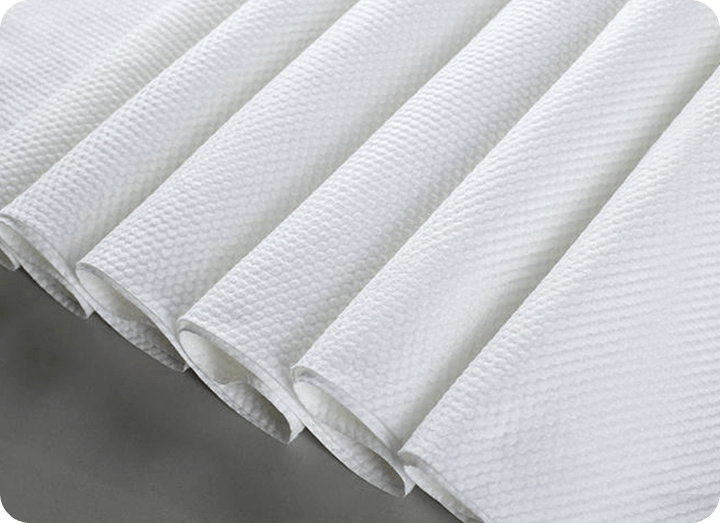
What buyers should evaluate in a pouch-grade nonwoven
1. Converting stability
The material has to move through the converting process consistently. Production teams normally care about whether a material feeds cleanly, maintains a stable structure, and supports repeatable runs. A material that looks acceptable as a loose sample still needs to be validated under actual line conditions.
2. Heat-sealing behavior
Heat sealing is not a property that should be judged from a marketing statement alone. Equipment, pouch format, process settings, and fill behavior all influence the result. The practical approach is to review the product-specific technical data and then confirm sealing performance on the buyer’s own equipment.
3. Linting and production cleanliness
Fiber shedding can affect both the production environment and the appearance of the finished pouch. Low-linting performance is therefore a useful review point during material qualification, especially when production teams are comparing several candidate substrates.
4. Finished-pouch feel and appearance
The pouch material is also part of the consumer-facing product. Texture, softness, cleanliness, and visual consistency can all influence how the finished pouch is perceived. These factors should be evaluated using finished samples rather than inferred from a specification sheet alone.
5. Documentation for internal review
Procurement and quality teams typically need more than a sales brochure. A useful qualification package can include a product-specific TDS, MSDS, relevant third-party reports, and supplier statements that support the buyer’s internal review. The exact document set should be requested for the specific material under evaluation.
Why sample testing matters more than the product name
Two materials sold under the same broad term “snus paper” can behave differently in production. Even when basis weight looks similar, a manufacturer still has to consider converting behavior, sealing response, linting, pouch feel, and the way the material works with the selected equipment.
This is why a sourcing process should move from keyword → product candidate → documentation review → sample trial → line validation, rather than from keyword directly to bulk purchasing.
How Musenn approaches pouch material qualification
Musenn positions its oral pouch material solutions around qualification rather than one-size-fits-all claims. Current public product options include 32 gsm and 34 gsm. The qualification-document set should be matched to the exact sample identity: current published numeric values are for the 34 gsm manufacturer TDS, while the controlled TDS revision remains under method-reference review. Sealing and converting performance should be validated on the customer’s own equipment.
For teams already comparing suppliers, the nicotine pouch fabric and snus paper material page explains the application route, while the pouch material qualification guide shows what information to prepare before a sample trial.
A practical buyer checklist
- What pouch format are you producing?
- What equipment and sealing method will be used?
- Which basis-weight option are you evaluating?
- What converting or finished-pouch issue are you trying to improve?
- Which technical and supplier documents does your internal team need?
- How will the sample be evaluated before commercial supply?
If those questions are clear, “snus paper” stops being a vague sourcing phrase and becomes a defined material qualification project.